
EST Purge and Trap
Purge and Trap
Purge and Trap is a sample preparation technique widely used in environmental laboratories for the analysis of volatile organic compounds (VOCs) in water, soil and other sample matrices. Purge and Trap is used in regulatory methods such as EPA 524, 624 and 8260.
The EST Purge and Trap combined with the SCION Instruments’ 8300 or 8500 GCs provides a complete solution for any environmental laboratory
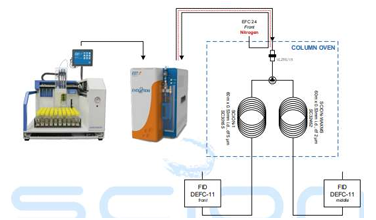
Figure 1. Flow diagram of instrument set up
How does Purge and Trap work?
The purge and trap method involves three stages: purging, trapping and thermal desorption.
To purge the sample, a stream of inert gas, helium or nitrogen, is gently bubbled through the sample. The VOC’s are stripped from the sample matrix and transferred into the gas phase.
The VOC gas stream passes through a sorbent trap packed with adsorbent materials such as tenax, silica gel or activated carbon. The VOCs are ‘trapped’ on the trap while the purge gas vents to the waste.
The trap is then heated rapidly to release the adsorbed VOC’s. A carrier gas backflushes the trap, transferring the concentrated analytes into the GC for the separation and detection of the compounds.
What are the advantages of Purge and Trap?
Purge and trap has the ability to concentrate compounds before analysis. The high-sensitivity capability of this instrument allows compounds to be detected at ppb levels.
Another advantage of the purge and trap is that it is a suitable technique for a variety of sample matrices, with both aqueous and solid samples being analysed without the need for direct injection of water onto the GC or additional sample preparation.
EST Purge and Trap
The EST Purge and Trap involves two products, the Centurion autosampler and the Evolution concentrator.
The Centurion autosampler has the capacity for 100 samples whilst the Evolution concentrator offers a variety of adsorbent material options which makes it a versatile product for use in a diverse range of applications.
BTEX in water
The Purge and Trap is an excellent solution for the analysis of BTEX in water. Our application note (AN183): “The analysis of BTEX in water with EST Purge and Trap” gives the optimal method settings and excellent linearity results. Two columns (SCION-1 and SCION-WAXMS) were used for analyte confirmation and showed good resolution and separation of the BTEX compounds. See our technical note on analyte confirmation in SCION’s knowledge centre.