
GC Inlet Septa Selection Guide
What are GC inlet septa?
GC inlet septa are small circular septa usually made from rubber or silicone which sit in the GC injection port before the liner. Choosing the correct septum for your application and system is crucial for trouble free analysis.
The septa is the boundary between the external environment and the pressurized GC system and therefore is responsible for creating a leak-free seal between them. The septa allows the syringe to inject into the system without losing system pressure and after injection maintains the seal to prevent contamination from entering the system. The septa must be able to withstand the temperatures of your method and not leach contaminants which will be problematic to your analysis.
GC Inlet Septa Size
The diameter of the septa you require will be determined by the GC system you have as the diameter varies between manufacturer and model. It is important to use the correctly sized septa for your GC inlet as this is crucial to achieving an appropriate seal and therefore determines the performance of your system.
Temperature Resistance
Different septa are designed to be used in different temperature ranges and have different temperature limits. Choosing the wrong septa can lead to degradation if the temperature is too high and coring if the temperature too low.
Low-temperature septa are made from softer silicone and tend to have a maximum temperature limit of 200-275 °C but benefit from being low cost. Medium temperature septa are most suitable for temperatures between 275-350°C, they benefit from having low bleed and due to being made from a softer silicone than high temperature septa, they are gentler on autosampler needles. High temperature septa are bleed and temperature optimized and can be used for the higher temperature applications. They are designed for use at temperatures of 350- 400 °C. Beware that this type of septa can be too hard for lower temperature applications.
Bleed Characteristics
Bleed when in reference to GC inlet septa is the release of compounds e.g. siloxanes from the septum due to being exposed to heat. The result of this septum bleed can cause ghost peaks to appear in your chromatogram and baseline disruption. If using an MS detector, certain ions can appear in your mass spectra due to septum bleed, see Table 1.
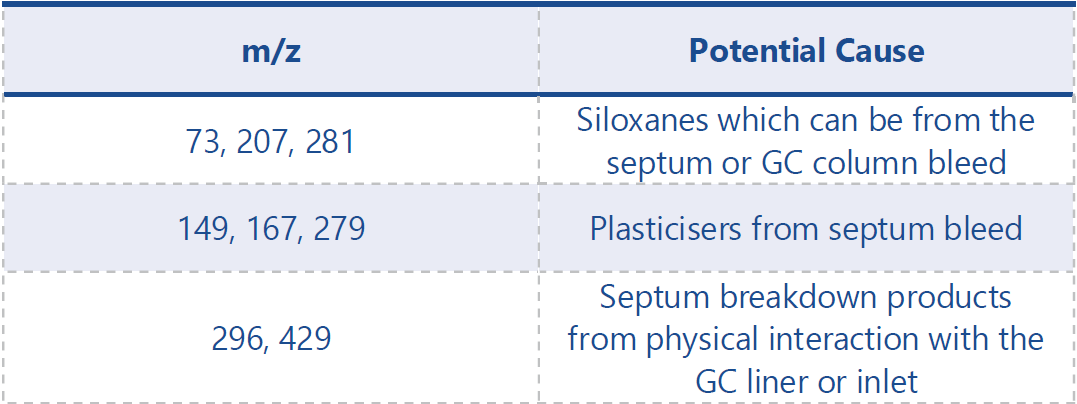
Table 1. Common ions seen in MS due to septum degradation
Mechanical Properties
GC inlet septa must keep a leak-free seal after injection and be resistant to coring. Coring or the septa splitting can be due to using the incorrect syringe, over tightening the septum nut or using the incorrect size of septum. The result of this can lead to small pieces of septum to fall into the inlet which can cause a leak. Residue from septa sticking to the inlet and fragments of septa from coring can disrupt your analysis.
Septa can come ‘prepierced’ which is called a centre guide. This aids with the ease of injection and minimizes septum damage. Coring does occur due to repeated injections so we recommend having a maintenance schedule in place within your lab. When using SPME, choosing the correct septa is crucial for the longevity of your SPME fiber due to its fragile nature. Choose a softer septa which ideally has a centre guide.
Chemical Compatibility
Your chosen septa need to be able to be exposed to the solvent being used in the application without swelling, cracking or causing excessive septum bleed.
SCION Instruments Septa Range
SCION Instruments have various septa available suitable for different applications, for a range of inlets diameters and with and without centre guides. See Table 2 below for examples of SCION septa and their benefits.
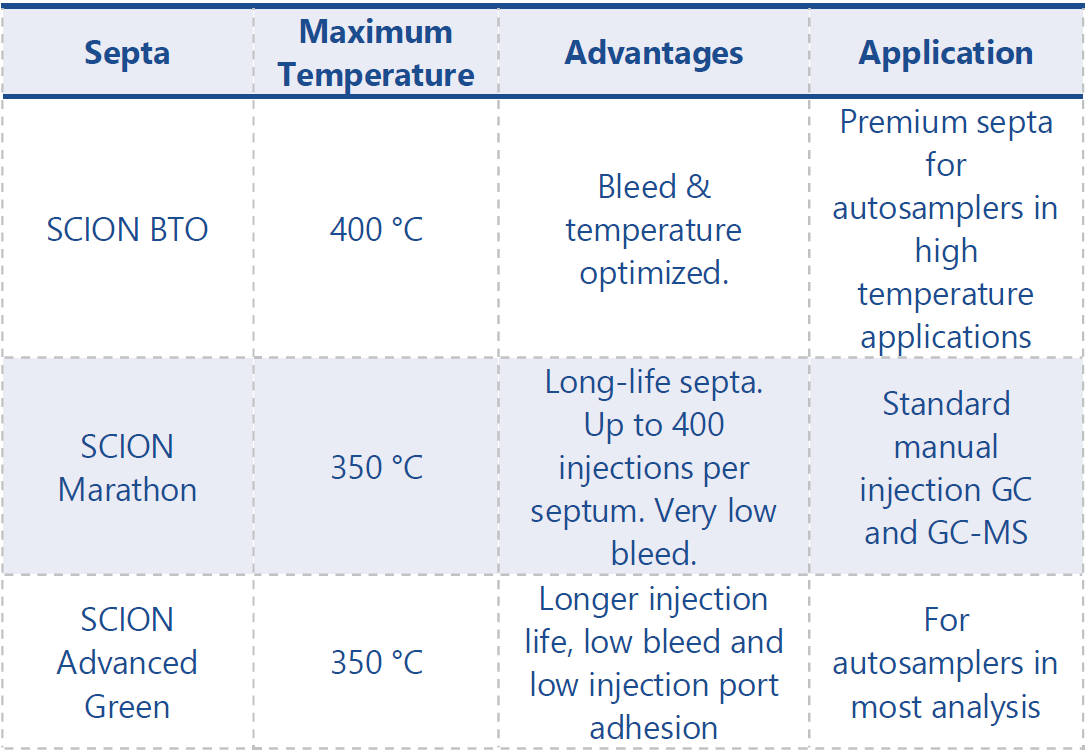
Table 2. SCION Instruments Septa Range