This resource pack helps you optimise GC and GC‑MS workflows with method‑aligned guidance for VOCs, SVOCs/POPs, hydrocarbons, and pesticides.
You’ll also get practical fixes across the full workflow: sampling, prep, analysis, QC, and reporting to streamline processes and improve lab efficiency.
This resource pack offers curated application notes and practical workflow troubleshooting insights, accessible instantly.
Environmental labs are built around test suites—VOCs, SVOCs/POPs, petroleum hydrocarbons, pesticides, and air monitoring—often across multiple matrices such as water, soil and air.
Select an example test suite below to explore method-ready workflows and click to access the Environmental Resource Pack – a curated set of supporting resources: key application notes to show proven approaches, and practical technical notes to help you avoid common pitfalls and reduce re-runs.
Environmental suites are rarely “one method, one matrix.” They are multi-step workflows that run under time pressure—and most lost productivity comes from re-runs caused by avoidable issues: sample handling, stability, prep choices, carryover/contamination, inconsistent integration, or QC drift.
This section helps you pinpoint where things go wrong and jump straight to proven fixes. Follow the workflow stages below to access practical technical guidance (storage, prep, analysis, data processing and QC) and the most relevant technical notes for your suite—so you can move from sample to defensible report faster, with fewer interruptions.
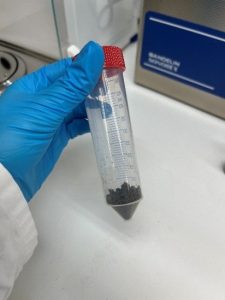
Good environmental data starts with making the right sampling decisions—where, how, and how much you collect—these things directly affect detectability, repeatability, and whether results stand up to scrutiny. Poor representativeness, the wrong container/preservative, headspace losses, or contamination at source are some of the fastest routes to failed QC and re-runs later in the workflow.
Use the resources within the Environmental Workflow Toolkit to align sampling approach, containers, handling and transport with your target suite (VOCs, SVOCs/POPs, hydrocarbons, pesticides) and matrix (water/soil/air), so your downstream prep and analysis can run “right first time.”
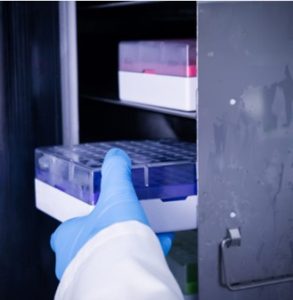
Storage is where good samples quietly become bad data. Time, temperature, light exposure, headspace, adsorption to container surfaces, and preservative choices can all change analyte concentrations—especially for volatile and semi-volatile compounds—leading to failed QC, poor recoveries, and re-runs that waste instrument time.
Use the resources within the Environmental Workflow Toolkit to select the right containers, storage conditions and holding times for your matrix and suite, so samples arrive at prep and analysis in a stable, defensible state—and your workflow stays on track.
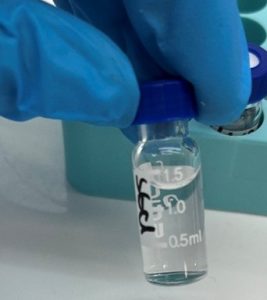
Sample prep is where most environmental workflows are won—or lost. The right approach (LLE, SPE, QuEChERS, derivatisation, headspace techniques) improves recoveries, reduces matrix effects, and protects your system from contamination and carryover. The wrong choice can create poor precision, failed surrogates, dirty extracts, and repeat runs that destroy throughput.
Use the resources within the Environmental Workflow Toolkit to match preparation to your matrix (water/soil/air) and suite (VOCs, SVOCs/POPs, hydrocarbons, pesticides), and to apply practical optimisation steps that make results more robust and repeatable.
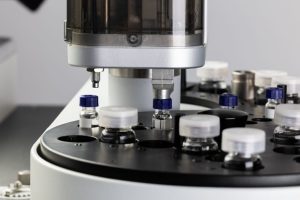
Analysis is where method intent meets real-world matrices. The biggest throughput killers at this stage are avoidable: inconsistent method setup, poor inlet/column choices, contamination and carryover, drifting performance, or parameters that aren’t tuned for your target compounds—especially when switching between suites or running “dirty” samples.
Use the resources within the Environmental Workflow Toolkit to strengthen method robustness and keep runs repeatable—covering practical guidance on method development, column care, and identifying/controlling contamination vs carryover—so you can deliver defensible data with fewer interruptions and re-runs.
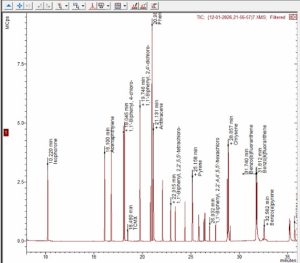
Fast runs don’t help if review and processing become the bottleneck. In environmental testing, inconsistent integration, noisy baselines, library-match uncertainty, and unhandled outliers can quickly turn routine batches into manual rework—slowing turnaround and increasing the risk of non-defensible results.
Use the resources within the Environmental Workflow Toolkit to standardise processing and speed up review—covering practical guidance on good integration, library compound scoring, and recognising data outliers—so results move smoothly from instrument to report with fewer exceptions.

QC is what delivers environmental results that you can stand behind. It’s also where many delays begin—failed surrogates, unstable calibration, misapplied internal standards, or incomplete QC sample design can force batch rework and re-runs that wipe out throughput.
Use the resources within the Environmental Workflow Toolkit to strengthen your QC foundation across suites and matrices, with practical guidance on calibration and standards, QC sample strategy, internal standards vs surrogates, validation fundamentals, and everyday best practice—so batches pass first time and reports stand up to scrutiny.
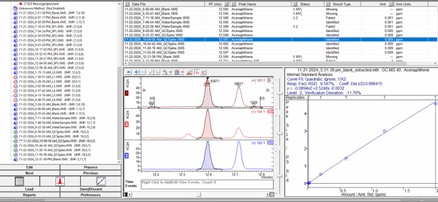
In environmental testing, delays often come from avoidable reporting issues—manual checks, inconsistent calculations, unclear audit trails, and rework triggered by QC exceptions. A standardised, review-friendly reporting approach helps protect turnaround time and ensures results are easy to justify to customers, auditors, and regulators.
Use the resources within the Environmental Workflow Toolkit to streamline the final step: producing consistent, audit-ready outputs with clear traceability from sample to result. Where applicable, align reporting workflows with regulated lab expectations around data integrity and compliance (e.g., controlled access, audit trails, and electronic records support).
Do you have an environmental analysis project and require product, applications, or training support?
We can help!
Fill out the form below and our team will get back to you as soon as possible.